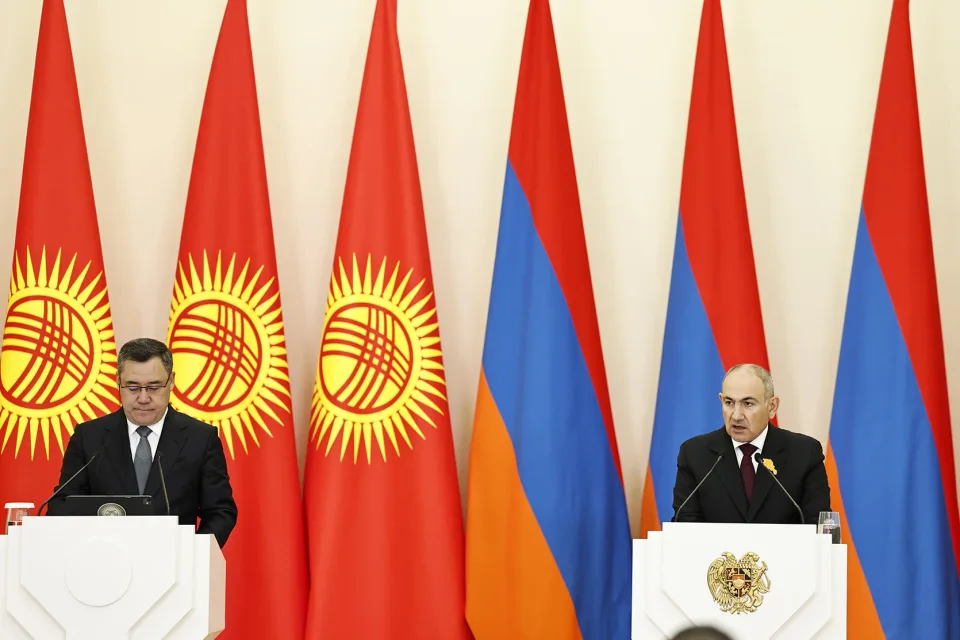
The report that Nikol Pashinyan had called Sadyr Japarov the president of Kazakhstan caught my attention because of my own professional experience. Working on international cooperation and protocol at Bishkek City Hall taught me how much preparation an official meeting requires, and how noticeable a mistake in just a few words of welcome can become.
The slip occurred during a statement to the press in Yerevan on 17 October. On 19 October, Gagik Vanoyan, head of Armenia’s State Protocol Service, was dismissed. The official decision did not state a reason, so a connection between the two events remains unconfirmed.
There were many occasions in my work when I had to respond quickly to a change during a meeting. One particular incident has stayed with me.
For a meeting with the mayor of the Chinese city of Chengdu, we had agreed in advance on an exchange of gifts. Everything was proceeding as planned. Then Chengdu’s mayor produced an additional gift: a lapel pin, which he immediately pinned on our mayor.
This extra gesture took us by surprise. We needed to find a way to reciprocate quickly.
I took off my own silver award pin and discreetly handed it to the mayor of Bishkek. He immediately returned the gesture by placing the pin on Chengdu’s mayor. That helped us avoid an awkward moment and maintain the exchange of goodwill.
For me, this episode illustrates how protocol works in practice. You can agree on the programme and prepare the gifts in advance, yet still need to pay close attention to what happens during the meeting. Sometimes a decision has to be made in seconds, calmly and without lengthy explanations.
That responsiveness builds on preparation. Before the meeting, the delegation list, guests’ names and titles, forms of address, interpretation, speaking order and seating arrangements all need to be checked. The better this work is organised, the easier it is to handle surprises.
There were also moments of a different kind. A senior official would put aside the prepared text and say something along these lines: “They have prepared some material for me, but I will do without it. I will speak as I see it.”
At that moment, I had just one thought: “Please don’t blurt out anything you shouldn’t.”
Behind that private reaction was a professional concern. At an international meeting, even a passing remark by an official can be understood by the other side as an official position. An ill-considered promise can create expectations that will be difficult to explain later.
In my work, I took account of the Kyrgyz Ministry of Foreign Affairs’ coordinating role in maintaining a coherent foreign policy. It mattered to me that remarks made at a meeting were consistent with agreed positions and the speaker’s authority.
A prepared text helps convey the intended meaning accurately, place the right emphasis and take account of issues that may be sensitive for the other side. Speaking freely requires the same knowledge of the subject and awareness of the responsibility carried by each phrase. Especially when a leader decides to speak without notes.
That is why getting a country’s name wrong matters. For a visiting leader, it is the name of the country they represent. An accurate form of address expresses respect for the guest and their office. It should not be treated as an insignificant formality.
At the same time, I would be cautious about publicly assigning blame. Before judging the head of protocol, we need to know what text was prepared, who checked it and what was handed to the speaker. Leaders also have their own share of responsibility: they need to familiarise themselves with the meeting materials beforehand. Without those facts, it is impossible to assess an individual fairly.
For me, the professional lesson from such incidents concerns training. Someone asked to accompany a delegation or organise an official meeting needs to understand the reasons behind their actions. Why is a particular form of address used? How should participants’ positions be taken into account? What needs to be agreed with the other side? How can an error be corrected calmly once it has happened?
These skills have to be learned. Instructions given on the eve of an event are not enough. Mentoring, discussion of practical situations and professional literature to consult during preparation are all needed.
Such experiences remind me how important it is to pass on professional knowledge. My father, Alykbek Dzhekshenkulov, has published a handbook, Diplomatic Protocol and Etiquette. It covers the preparation of visits and negotiations, cross-cultural communication and the national dimensions of protocol in the Kyrgyz Republic.
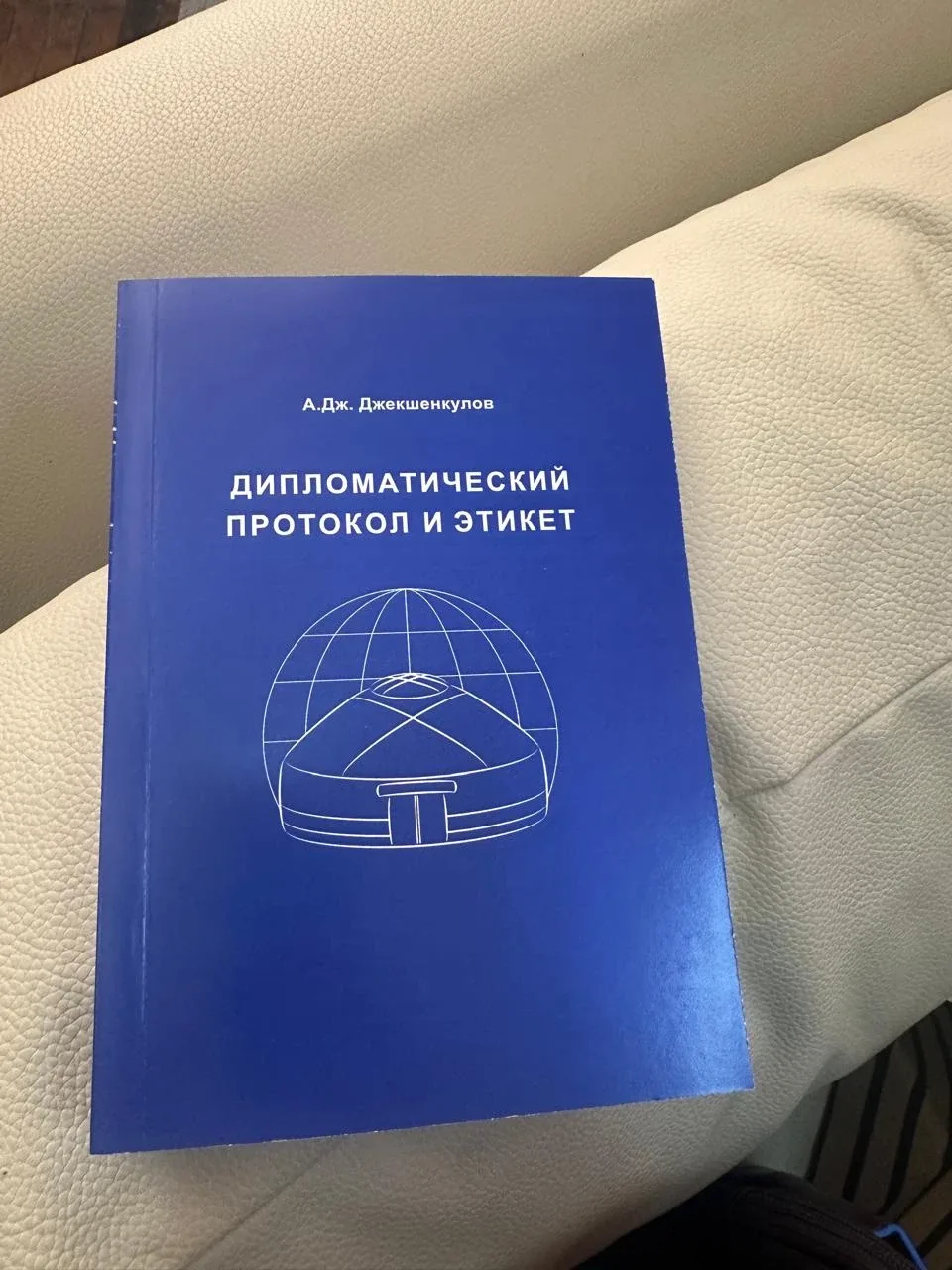
The handbook also has a section devoted to gift protocol. It explains why a gift should suit the occasion and the recipient’s position, take account of the other side’s cultural background and be presented appropriately. For me, that connects directly with the meeting with Chengdu’s mayor: behind a small pin was a gesture of respect that we were able to reciprocate immediately.
The experience of diplomats and practitioners needs to be preserved and passed on to the next generation. I would like books of this kind to become part of the training of staff in government bodies, municipalities and organisations receiving foreign partners. That would give a well-organised meeting a clear professional foundation that people can study, apply and develop.
Sources
- Decision No. 1029-A of the Prime Minister of Armenia, 19 October 2026, dismissing Gagik Vanoyan.
- RFE/RL’s Armenian Service: Pashinian Fires Protocol Chief After Diplomatic Gaffe, 19 October 2026.
- Dzhekshenkulov, A. D. Diplomatic Protocol and Etiquette: A Handbook for the Diplomatic Service of the Kyrgyz Republic. Bishkek: Kyrgyz-Russian Slavic University named after B. N. Yeltsin, 2026. pp. 144–145. In Russian.
- Decree No. 543 of the President of the Kyrgyz Republic, 14 November 2005, on the Ministry of Foreign Affairs and its coordinating role, paragraphs 1 and 4. Historical context for the author’s recollections of work at City Hall.
- Official publication of the press statements and photographs of the meeting, 17 October 2026.