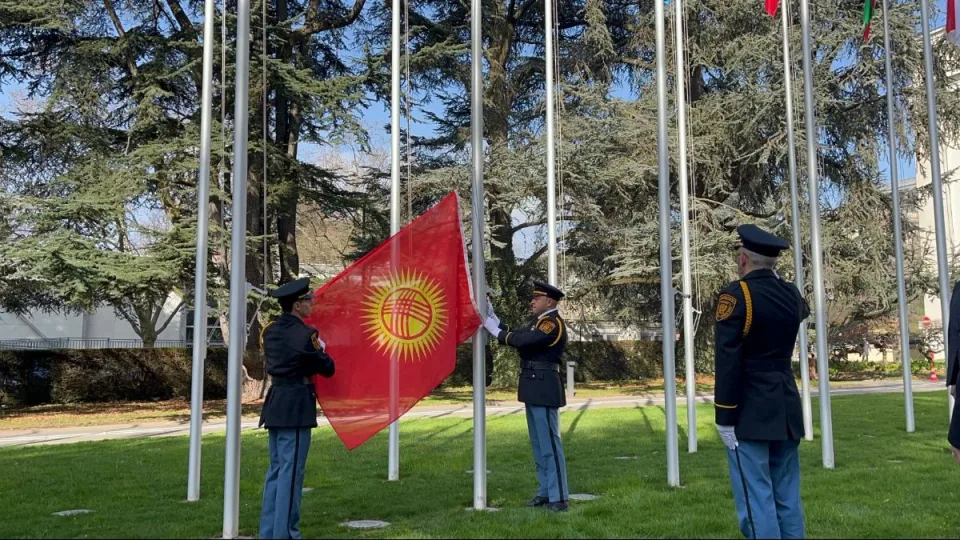
Some moments in the history of independence are preserved in photographs: the raising of a national flag, an address to the United Nations, the signing of an international treaty. Behind each stand months, sometimes years, of work: negotiations, carefully agreed wording, the search for solutions and the building of trust. This everyday work forms the history of independent Kyrgyzstan’s diplomacy.
As Kyrgyzstan marks 35 years of independence and Diplomatic Service Workers’ Day, there is reason to reflect on how the country developed its own voice in international affairs, and on the people who have represented and continue to represent its interests.
From the Ministry’s Origins to Independent Diplomacy
The history of the foreign ministry began long before 1991. On 17 March 1944, the People’s Commissariat for Foreign Affairs of the Kyrgyz Soviet Socialist Republic was established. Independence, however, transformed the scale of its responsibilities. The diplomatic service now had to represent a sovereign state independently and build its relations with the outside world.
In the early years, diplomatic relations had to be established, missions opened, international agreements prepared and staff trained, all at the same time. This took place against a backdrop of profound economic and social change. The state was acquiring new powers and learning to take responsibility for its own decisions.
Kyrgyzstan in the UN and International Organisations
A major step was Kyrgyzstan’s admission to the United Nations on 2 March 1992. The country gained the opportunity to speak in its own name, participate in discussions of international issues and put forward its own initiatives. That date became a defining milestone in the history of Kyrgyz statehood.
The work that followed involved maintaining existing relationships and establishing new ones. For landlocked Kyrgyzstan, relations with its neighbours and access to markets and transport routes directly affect everyday life: the supply of goods, the operation of businesses and opportunities to study, travel and earn a living.
Important milestones included accession to the World Trade Organization in 1998, participation in the founding of the Shanghai Cooperation Organisation in 2001 and entry into the Eurasian Economic Union in 2015. Each expanded the country’s international connections and required sustained negotiation.
Good Neighbourly Relations and Border Agreements
Relations with neighbouring countries have held a special place throughout the years of independence. In Central Asia, borders, water, transport and security are closely connected. Behind the wording of agreements lie the interests of particular villages, families and border communities. The importance of negotiations is therefore measured, above all, by how peacefully and securely people can live.
The signing of the Kyrgyz–Tajik state border treaty on 13 March 2025 was a major event in relations between the two countries. It reflected political decisions by their leaders and the work of negotiating delegations, government agencies, diplomats and specialists. The agreements created a foundation for stronger security and the restoration of connections and trust.
This experience was subsequently brought to an international forum. In May 2026, the UN General Assembly adopted by consensus a resolution on the peaceful resolution of border disputes, presented by Kyrgyzstan together with Tajikistan and Uzbekistan. The countries of the region offered their own negotiating experience for wider international discussion.
Consular Assistance and Economic Ties
For many citizens, diplomacy begins with a visit to a consulate: lost documents, difficulties with their status abroad, the need to contact relatives or return home. In such circumstances, people primarily expect clear answers and assistance.
Consular work reveals the human dimension of foreign policy. Diplomats act within their powers and the laws of the host country, but a timely approach, an explanation of procedures or help in contacting local authorities can make a considerable difference. Through this experience, citizens judge whether their state remains close to them even when they are far from home.
Economic ties are equally important. Introducing Kyrgyzstan to a foreign partner, holding initial talks with an investor or identifying opportunities for a domestic exporter often begins with the assistance of diplomatic missions. Subsequent results depend on the joint work of government bodies, businesses and local authorities. Trust built in external relations finds practical expression in projects and commitments that are fulfilled.
City Cooperation and Public Diplomacy
International cooperation also has a municipal dimension. During my work at Bishkek City Hall in international relations and protocol, I saw how relations between countries develop through contacts between cities. At this level, the international agenda becomes closer to residents’ everyday needs: public transport, urban improvements, city infrastructure, and cultural and educational exchanges. These links are particularly valuable when personal contacts and shared experience help cities find practical solutions.
Public diplomacy is closely connected to this work. Perceptions of Kyrgyzstan take shape through encounters with its people, cultural events, university ties, and business and professional contacts. Municipalities, educational institutions, civil society organisations, entrepreneurs and compatriots abroad all contribute. In my experience, attentiveness to partners, openness and the ability to maintain relationships after an official meeting create the trust needed for further cooperation.
Mountain Development and International Initiatives
Throughout independence, Kyrgyzstan has consistently promoted issues on which its own experience has international relevance. One concerns the development of mountain regions. At Kyrgyzstan’s initiative, the UN General Assembly proclaimed 2023–2027 the Five Years of Action for the Development of Mountain Regions. This agenda brings together the preservation of glaciers and water resources, climate change and people’s living conditions.
The initiative to hold the second mountain summit, Bishkek+25, in 2027 continues this work. It was also noted in the Bishkek Declaration marking the SCO’s twenty-fifth anniversary, adopted by heads of state on 1 September 2026. Hosting the SCO summit once again made Kyrgyzstan a venue for discussions of regional security and cooperation.
The UN Security Council: A New Chapter
Kyrgyzstan’s election to the UN Security Council holds a special place among recent diplomatic results. On 3 June 2026, the country was elected for the first time to a non-permanent seat for the 2027–2028 term. This is an important milestone on a path that began with admission to the UN in 1992.
From January 2027, Kyrgyzstan will participate in the work of the body with primary responsibility for maintaining international peace and security. This will require careful attention to the international agenda, the preparation of positions and a sustained search for agreement with states whose interests and approaches may differ considerably. The experience of the diplomatic service and relationships built over decades will be essential.
People, Trust and Institutional Memory
The history of these 35 years cannot be reduced to a list of visits and agreements. It includes difficult periods, disagreements and issues that took years to resolve. Not every meeting produced immediate results. Sometimes the essential task was to keep dialogue possible and return to a discussion when conditions for agreement emerged.
Behind this work stand generations of staff at the foreign ministry, embassies, consulates and permanent missions: leaders and specialists, interpreters and protocol officers, people whose names are publicly known and those who have worked for years outside the spotlight. They preserve the state’s institutional memory: the history of negotiations, knowledge of commitments and an understanding of partners.
In 1991, Kyrgyzstan gained the right to determine its own foreign policy. Over 35 years, that right has taken shape through diplomatic relations, international treaties, national initiatives and experience in defending national interests.
Kyrgyzstan’s diplomacy is expressed in its ability to speak on behalf of the country, protect its citizens, create economic opportunities, strengthen good neighbourly relations and contribute its national experience to addressing shared problems. Its strength is measured by the trust it builds and by tangible results that improve people’s lives.
On Diplomatic Service Workers’ Day, I would like to thank the veterans and current members of Kyrgyzstan’s diplomatic service for their patience in difficult negotiations, assistance to citizens and everyday work whose results are not always immediately visible. This consistent and often quiet effort is what gives Kyrgyzstan its independent voice in the world.
Sources
- Kyrgyz Ministry of Foreign Affairs: institutional history.
- The United Nations in the Kyrgyz Republic.
- WTO: the Kyrgyz Republic.
- SCO: Declaration on the Establishment of the Organisation.
- EEC: the Kyrgyz Republic in the EAEU.
- Kyrgyz Ministry of Justice: ratification of the Kyrgyz–Tajik border treaty.
- Fergana: UN resolution on the peaceful resolution of border disputes.
- FAO: Five Years of Action for the Development of Mountain Regions.
- SCO: Bishkek Declaration marking the organisation’s twenty-fifth anniversary.
- UN: Security Council elections, 3 June 2026.
- Kyrgyz MFA: election to the UN Security Council for 2027–2028.
- Kabar: raising Kyrgyzstan’s new flag at the UN Office in Geneva, photo source.