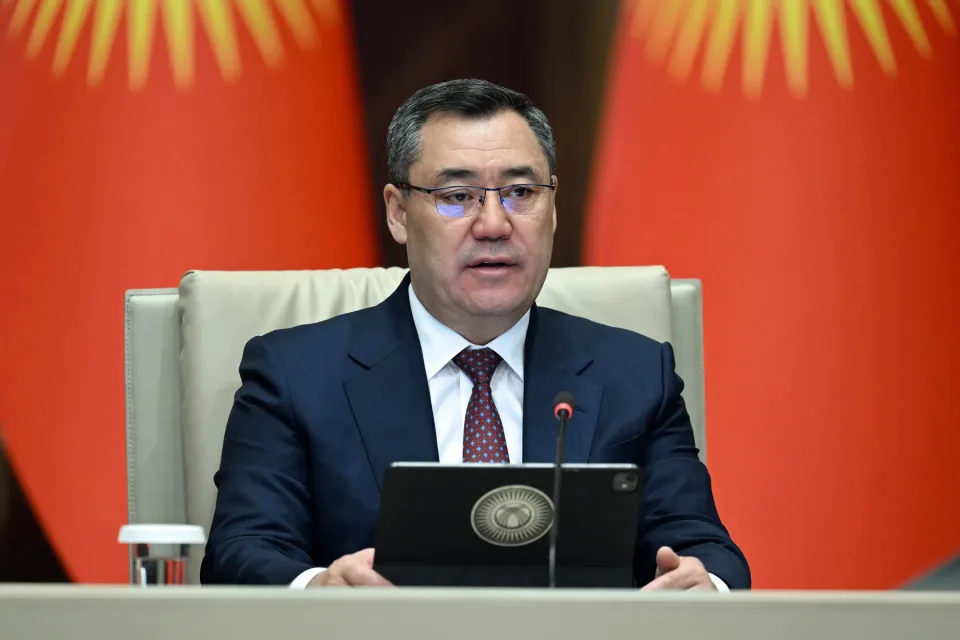
On 21 October 2026, at a national meeting in Bishkek, President Sadyr Japarov outlined Kyrgyzstan's development priorities through the end of 2030.
For businesses and investors, the address brings together several connected themes: property protection, support throughout investment projects, long-term finance, exports and infrastructure. Ten priorities stand out in this economic agenda.
1. Property protection as a shared responsibility of the state
The president proposed a unified framework for protecting private property and supporting entrepreneurship. A favourable investment climate was described as a shared responsibility of the executive, legislative and judicial branches. The role of law enforcement in protecting lawful business activity was also highlighted. Particular attention was paid to enforcing court decisions, which determines whether rights can be restored in practice.
2. Investor support throughout project implementation
Further simplification of permitting procedures, investment agreements and investor support was outlined. This approach broadens the scope of investment policy by connecting capital attraction with the conditions needed to turn a project into an operating business.
3. Investment quality as a distinct priority
The address highlighted technology, new skills, productivity and job creation. These priorities provide a broader basis for assessing investment proposals, taking account of each project's contribution to the economy and the development of capabilities within Kyrgyzstan.
4. Finance that considers a project's future earnings
The president proposed an investment approach that considers a business's viability and its capacity to generate income. State banks and bilateral development funds would be assessed against specific outcomes: projects implemented, investment attracted and jobs created. The development of capital market instruments was also envisaged.
5. Education and healthcare as areas for partnership with business
The construction of universities, schools and clinics through public-private partnerships received particular attention. The address envisaged support with land allocation, utility connections and permits, primarily for domestic investors. This connects social objectives with opportunities for private investment.
6. More advanced processing within Kyrgyzstan
Industrial policy is intended to support technological modernisation and products with greater added value. Areas identified for support include food processing, construction materials, pharmaceuticals, chemicals, light industry and small-scale machinery manufacturing. The aim is for a larger share of product value to be created within Kyrgyzstan.
7. Service exports as a separate source of growth
Priority areas include information technology, financial services, international logistics, tourism, education and healthcare. Proposed measures include workforce training, international recognition of qualifications and simpler cross-border payments. In tourism, the stated objectives are to develop year-round offerings and improve service quality.
8. Territorial development linked to infrastructure
The address supported compact settlements and multi-storey construction where seismic, engineering and natural conditions allow. Housing development was considered alongside utilities, transport and social infrastructure. Decisions on expanding settlements would take account of water availability and the preservation of agricultural land.
9. Energy and transport as foundations for new projects
Increasing generation capacity, modernising networks and developing transport corridors form part of the wider economic agenda. For businesses, these areas are closely connected: opening a production facility, tourism complex or logistics centre depends on energy availability, utility connections and transport access.
10. International agreements followed by economic implementation
Following international meetings, the address set out the task of implementing agreements, attracting investment, expanding transport corridors and increasing visitor flows. For economic diplomacy, this establishes practical work on supporting partnerships and projects.
The address identified targets to be achieved by the end of 2030: average annual real GDP growth of 8% and a 20% annual increase in foreign direct investment inflows. The practical implications for businesses will become clearer as the proposed frameworks, regulatory decisions and financing mechanisms are adopted.