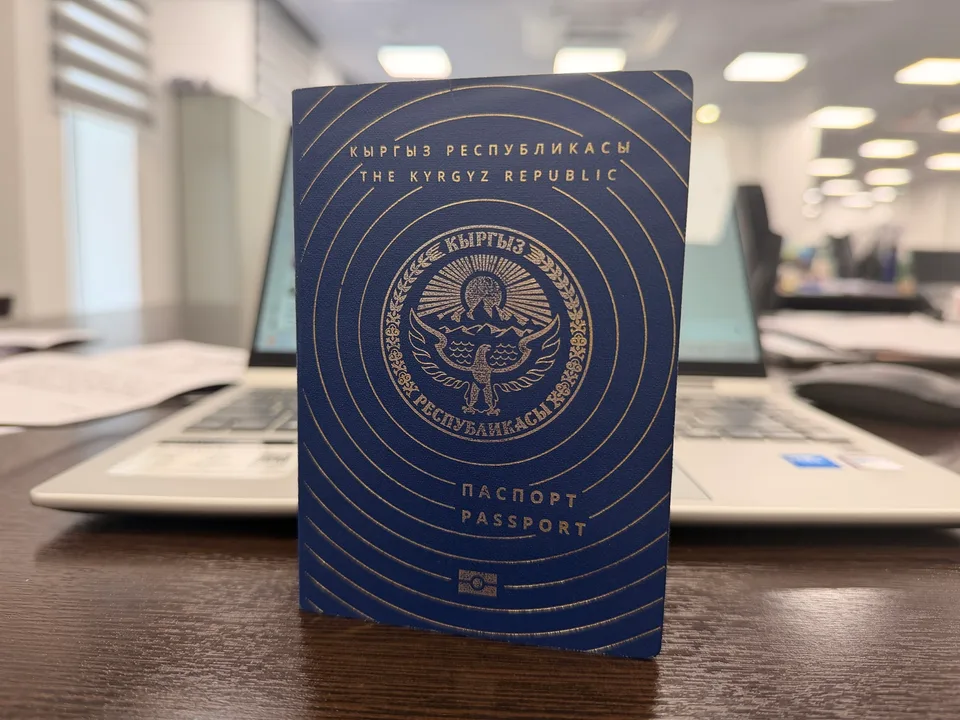
Preparing for a trip abroad brings familiar questions: which documents are needed, how long the paperwork will take, and how long a visitor may stay. Behind these everyday details are visa rules and agreements between states that shape the opportunities available to citizens.
Passport rankings offer a broad picture of travel access. Yet a country's overall position does not always show how entry conditions have changed for a particular destination: whether procedures have become simpler, costs have fallen, or permitted stays have become longer.
This is the context in which to consider the October update of the Henley Passport Index. Kyrgyzstan ranks 81st, with access to 59 destinations without a visa obtained in advance. In January 2026, it ranked 75th with 61 destinations.
Specific changes to travel conditions provide a fuller picture of the work of Kyrgyz diplomacy. China and Thailand show that citizens have gained opportunities on some routes even as Kyrgyzstan's overall position in the ranking has declined.
Henley counts visa-free entry, visas on arrival and certain electronic travel authorisations. Each destination contributes one point, with no additional weight for its economic importance or the length of the permitted stay. Passports with the same score share a rank. A drop of six places therefore does not mean that six countries have imposed new restrictions on Kyrgyz citizens.
The change from 61 to 59 represents a net loss of two destinations. Comparing the list published in January with Henley's current data points to Cabo Verde and Nicaragua: both were previously counted as visa-on-arrival destinations but now require advance visa arrangements.
From 1 January 2026, Cabo Verde discontinued visas on arrival for a broad range of nationalities, including citizens of Kyrgyzstan. Visas must now be obtained before travel. In Nicaragua, Directive No. 002-2026, effective from 16 February 2026, placed Kyrgyzstan on the list of countries whose citizens require a Category C visa subject to prior approval.
Travel to these countries remains possible once the new requirements are met. However, a requirement to obtain a visa in advance removes a destination from Henley's visa-free access score. The link between these changes and the decline in Kyrgyzstan's score is inferred from the comparison of the lists; the materials reviewed did not contain a separate country-by-country explanation of Henley's recalculation.
Both decisions affected a broad range of countries. It would be unjustified to treat them as restrictions specifically directed against Kyrgyzstan and use them to judge the quality of its diplomats' work.
Meanwhile, travel conditions for other destinations have improved. Since 15 September 2026, holders of ordinary Kyrgyz passports have been eligible for visa-free tourist visits to Thailand for up to 30 days, subject to the applicable immigration requirements.
Previously, Kyrgyz citizens could obtain a Thai visa on arrival for up to 15 days, with a standard fee of 2,000 baht. The new arrangement removes the need to obtain that visa and allows a longer stay.
For travellers, this is a tangible improvement. Under Henley's methodology, however, a visa on arrival and visa-free entry each earn one point. Moving from one to the other does not itself increase the number of accessible destinations, even though travel becomes more convenient.
Since 20 August 2026, Kyrgyz citizens holding ordinary passports have also gained new opportunities to visit China. The 240-hour visa-free transit programme allows entry through 65 designated ports and stays of up to ten days in permitted areas, provided travellers hold tickets for onward travel to a third country or region. A separate arrangement provides for visa-free visits to Hainan Province for up to 30 days.
These rules come with specific conditions and geographical restrictions. Nevertheless, they broaden opportunities for tourism and short business visits. Transit travel is explicitly excluded from Henley's standard assessment scenario, so this form of facilitation does not necessarily improve a passport's position in the index.
Decisions to change entry rules are taken by the authorities of the destination countries. Publicly available documents do not allow the contribution of every participant in the negotiations to be precisely assessed. The improvements themselves are confirmed, however, and should be taken into account when considering Kyrgyzstan's foreign policy results.
Visa negotiations also depend on matters beyond the authority of an individual embassy. European Union legislation, for example, provides for consideration of migration risks, public order and security, economic benefits, external relations and reciprocity. European visa liberalisation practice also takes account of document security, border management and cooperation on the return of citizens who have breached the conditions of their stay.
These criteria are not an established explanation for Kyrgyzstan's current ranking trajectory. They illustrate how a state's negotiating position is shaped by the joint work of several agencies. Diplomats present that position abroad, while the strength of their arguments also depends on the quality of travel documents, the reliability of statistics and the implementation of agreements.
The regional picture offers further context. A fair comparison includes all five Central Asian countries over the same period.
| Country | January 2026: rank / destinations | October 2026: rank / destinations | Change in destinations |
|---|---|---|---|
| Kazakhstan | 61 / 78 | 66 / 77 | −1 |
| Kyrgyzstan | 75 / 61 | 81 / 59 | −2 |
| Tajikistan | 81 / 54 | 87 / 52 | −2 |
| Turkmenistan | 87 / 47 | 93 / 44 | −3 |
| Uzbekistan | 75 / 61 | 82 / 57 | −4 |
Over this period, all five countries fell by five to seven places, while their number of accessible destinations declined by one to four. Similar trends do not, by themselves, establish a common cause. Each country has its own foreign policy priorities, agreements and negotiating circumstances. These figures help place the region in context, but they do not provide a basis for ranking the professionalism of its diplomatic services.
At the same time, expanding travel opportunities remains a legitimate public expectation. A substantive discussion benefits from clear information about where entry conditions have changed, which destinations matter most to citizens and businesses, and what improvements the Kyrgyz side is seeking.
Results may take the form of visa exemptions, longer-validity multiple-entry visas, fewer required documents, faster processing or the ability to apply without travelling to another country. Such changes can make a substantial difference even when a visa remains necessary and the Henley score stays the same.
Assessing this work requires attention to the rules actually in force for ordinary passport holders, processing times and costs, and access to consular services. Signing an agreement, bringing it into force and enabling a citizen to use the new entitlement are also distinct stages.
The Henley Passport Index remains a useful reference point for international mobility. A more substantive discussion of Kyrgyz diplomacy emerges when the figures are considered alongside specific rules and results. For the individual traveller, the meaningful result is a simpler, more affordable and more convenient journey.
Sources
- Henley Passport Index: current ranking
- Henley Passport Index: methodology
- Kabar, 13 January 2026: baseline figures for Central Asian countries
- Ministry of Foreign Affairs of the Kyrgyz Republic: visa-free stays in Thailand for up to 30 days
- Royal Thai Embassy in Helsinki: arrangements effective from 15 September 2026
- Royal Thai Embassy in Doha: previous 15-day visa-on-arrival arrangement and fee
- Royal Thai Embassy in Budapest: visa-on-arrival eligibility and fee, February 2026
- National Immigration Administration of China: Announcement No. 4 of 20 August 2026
- EU Regulation 2018/1806: visa policy criteria
- European External Action Service: visa liberalisation criteria
- Henley Openness Index: current HPI figures for Central Asian countries
- Government of Cabo Verde: nationalities requiring a visa in advance
- Passport Index, 20 January 2026: Cabo Verde's suspension of visas on arrival from 1 January 2026
- Nicaragua: Directive No. 002-2026, copy of the official publication
- Full text of Nicaragua's Directive No. 002-2026
- Henley: current destination entry requirements for Kyrgyz passport holders
Information checked as of 22 October 2026.