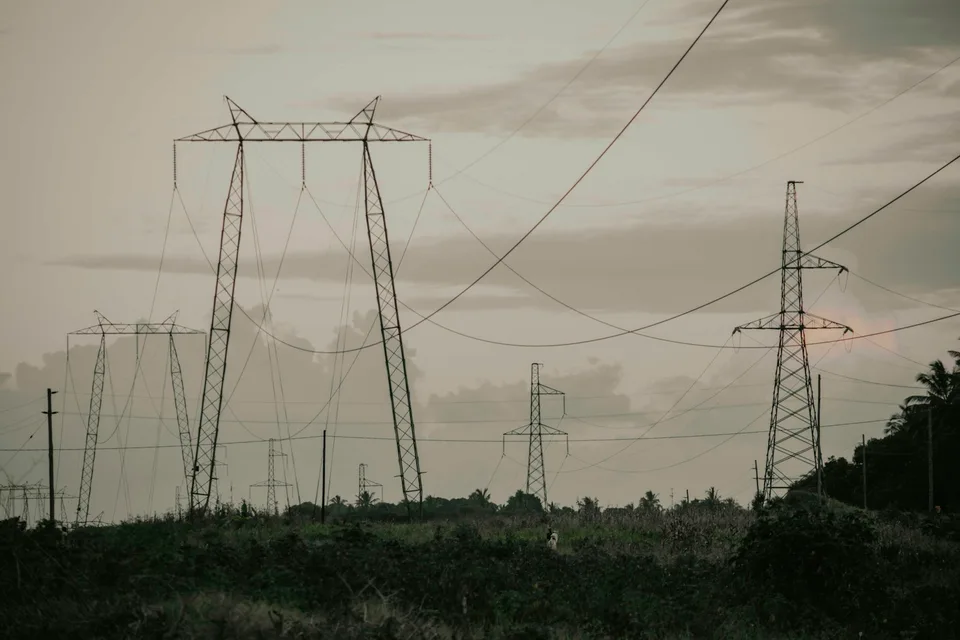
As temperatures fall, reliable electricity becomes especially important. Households use electric heaters more often, need more lighting and place greater demand on the grid. For businesses, even a brief interruption can mean suspended operations, lost orders or spoiled products.
When announcing the start of Bishkek's heating season on 28 October, the city administration cited the need to ease pressure on the electricity network as more people used electric heating.
The national energy balance also requires attention. According to the Cabinet of Ministers, Kyrgyzstan's electricity consumption is expected to reach 19.6 billion kWh in 2026. Planned domestic generation amounts to 15.5 billion kWh, with another 4.1 billion kWh to be imported.
This does not mean that power cuts are inevitable in winter. However, preparing for cold weather is also a task for consumers. How ready is a home or business for a temporary loss of electricity? Which appliances must keep running? And what backup capacity do they actually need?
Start with essential loads
In a private home, priorities may include lighting, the refrigerator, communications equipment, boiler controls and the circulation pump. Shops depend on refrigeration and the till; offices need computers and internet access. In industry, critical loads depend on the production process.
Supplying a few appliances is considerably easier than keeping an entire building running, especially one heated by electricity. The starting point is therefore to identify what needs power and for how long.
Generators and battery systems provide backup electricity, while solar panels generate power on site. Heating is a separate consideration: under suitable conditions, heat pumps can reduce the electricity required to heat a building. These technologies perform different functions and can complement one another.
Generators: electricity when grid power is unavailable
A petrol or diesel generator produces electricity independently of the grid. Its operating time depends on fuel reserves and the permitted duty cycle of the particular model.
Selection should account for rated output, equipment starting loads, fuel consumption, noise and maintenance. Starting and transfer times also matter: some equipment cannot tolerate even a brief interruption.
Location requires particular care. A generator must never be operated inside a home or garage, even with the doors open. Because of the risk of carbon monoxide poisoning, it must run outdoors, a safe distance from windows and ventilation openings.
Batteries: stored energy for essential equipment
A battery system with a suitable inverter can keep selected loads running during an outage. It does not need to burn fuel on site, but its stored energy is finite.
Backup duration depends on usable battery capacity and the consumption of connected equipment. Higher loads deplete the charge faster. Once discharged, the battery must be recharged from a source supported by the system.
Any promise of several hours of operation should therefore be supported by a clear calculation. Backup for lighting, communications and heating controls is different from a system designed to supply electric heaters.
Solar panels: on-site generation with seasonal limits
A solar power system can generate part of the electricity required at the property. Its winter performance needs a separate assessment: daylight hours are shorter, the sun is lower, and cloud cover, shading and snow on the panels affect output.
Summer figures cannot be applied to the whole year. Nor can complete energy independence be promised without calculating consumption and assessing installation conditions.
There is another important point: rooftop panels alone do not guarantee electricity during a grid outage. A conventional grid-connected system will generally shut down as well. Backup operation requires an appropriate inverter and connection arrangement, plus energy storage for periods without solar generation.
On-site generation and backup power therefore call for different approaches. One aims to replace part of the electricity purchased from the grid; the other keeps selected equipment operating during an interruption.
Heat pumps: heating with lower electricity consumption
A heat pump draws heat from outdoor air, the ground or water and transfers it into the heating system. Electricity is needed to run the equipment, but under suitable conditions the heat delivered can exceed the electrical energy consumed.
These systems are used for space heating and hot water, and some models can also provide cooling. Their efficiency depends on the equipment type, outdoor temperature, the building's heat loss and the water temperature required by the heating system.
Winter conditions are particularly important for air-source heat pumps. Their heating capacity and efficiency can decrease as outdoor temperatures fall. Equipment should therefore be selected using its performance at the design winter temperature; in some cases, a supplementary heat source is needed.
A heat pump is not itself a backup electricity source: it still needs power when the grid is unavailable. If heating must continue through an outage, the heat pump and backup system need to be sized together.
Choose a system for the property
One home may need only battery backup for a few circuits. Another property may require a generator. For an industrial facility, combining several power sources may be justified. Where heating is part of the task, heat loss and the suitability of a heat pump need separate assessment.
Selection starts with a survey of the wiring, consumption, critical loads and required backup duration. Businesses should also consider the cost of downtime.
Compare the full cost of a solution: equipment, installation, maintenance, fuel and eventual component replacement. The system's capabilities, limitations and warranty terms should be clear before installation.
Preparing for winter involves practical steps: reducing heat loss, checking wiring and deciding what backup is necessary. Well-planned systems help households maintain daily routines and businesses keep operating during temporary interruptions.
In Bishkek, Bishkek Electro works with these requirements. Its services cover solar power systems, generators, inverters, battery systems and heat pumps for residential, commercial and industrial properties. Equipment selection, installation and maintenance allow electricity supply and heating to be considered together, taking the conditions of each building into account.
More about the company's solutions: biel.kg · @bishkek_electro
Contact: +996 556 157 257.