Kyrgyzstan’s main international gateway is undergoing one of its most visible transformations in decades. New terminal space, modern equipment, expanded parking and upgraded access infrastructure are reshaping Manas itself. But the significance goes far beyond the reconstruction of a single airport: it is about Kyrgyzstan’s connectivity with the outside world and the first moments in which many visitors experience the country.
For many visitors, their first encounter with Kyrgyzstan begins at the airport.
Before the first drive through Bishkek, before meetings and before seeing the city, an initial impression of the country begins to form the moment the aircraft door opens.
For a tourist, these are the first minutes of a journey. For a foreign delegation, they mark the beginning of an official visit. For an investor, they are an early indication of how processes work and how easy the country is to navigate.
That is why I have always viewed an airport as more than transport infrastructure. It is part of a country’s image and the first physical space that welcomes a visitor on arrival.
From Frunze to modern Manas
Manas has a long history of its own.
The new airport received its first aircraft in October 1974. It was an Il-62 carrying Alexei Kosygin, Chairman of the Council of Ministers of the Soviet Union.
On 4 May 1975, the first scheduled service, Moscow Domodedovo - Frunze Manas, was launched. That date is generally regarded as the birthday of Kyrgyzstan’s principal airport.
The name Manas was proposed for the airport by Chyngyz Aitmatov, linking the republic’s main international gateway with the hero of the Kyrgyz epic.
A different chapter began after independence. Kyrgyzstan became a member of the International Civil Aviation Organization, ICAO, in 1993, and in 1994 the first international service between Bishkek and Istanbul was launched.
Over the decades, the country, the city, the route network, passenger volumes and the expectations placed on an international airport have all changed.
Today, Manas is entering another stage in its history.
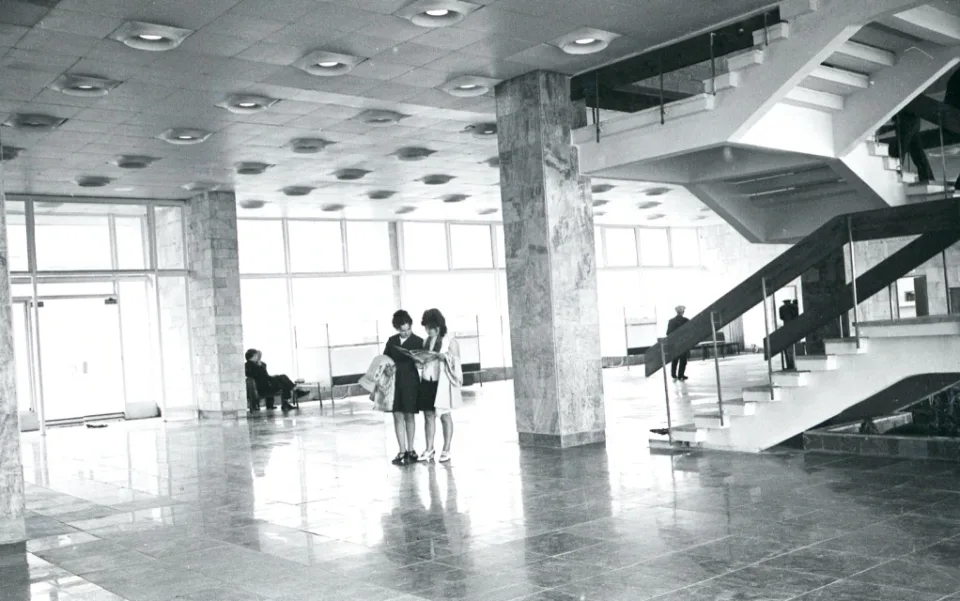
Manas Airport waiting hall, 1975. Archive photo. Source: Tazabek.
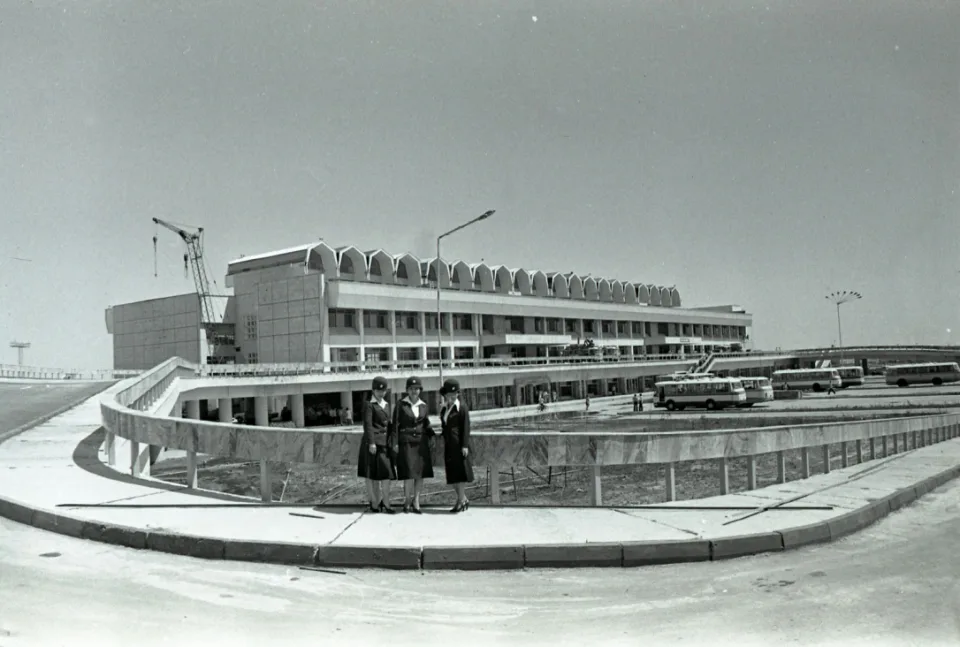
The new Manas Airport, 1980. Archive photo. Source: Tazabek.
FRU → BSZ
There is also a smaller, but highly symbolic, change.
On 9 August 2025, the airport’s IATA code was changed from FRU to BSZ.
FRU preserved the capital’s former Soviet-era name, Frunze, in the international aviation system. Bishkek had carried its current name for more than three decades, yet airline tickets, baggage tags and global booking systems continued to identify it by the old code.
That has now changed as well.
At first glance, it is only a change of three letters. But against the backdrop of the airport’s wider transformation, the move from FRU to BSZ is quite symbolic: as Manas is modernised, the international identity of Kyrgyzstan’s principal air gateway is being updated too.
Manas is changing
The large-scale reconstruction of the airport began in 2025 and is now approaching completion.
The terminal complex has been expanded by more than 20,000 square metres, bringing its total area to nearly 60,000 square metres. The number of boarding gates is increasing from around eight to thirteen.
The runway has undergone major rehabilitation, while CAT III capability has been introduced, significantly improving airport operations in difficult weather and low-visibility conditions.
Ground infrastructure is changing as well. Parking capacity, previously around 700 vehicles, is being expanded to approximately 1,500 spaces. A multi-storey car park has been built and connected to the terminal by a covered passageway.
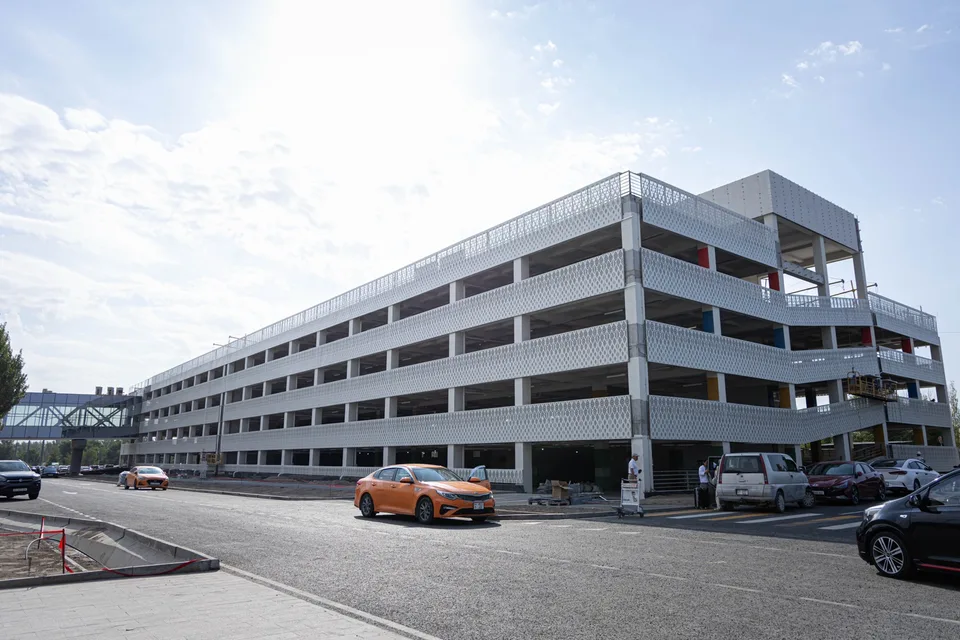
New multi-storey car park at Manas International Airport. Photo: Manas International Airport.
A new airport access road has also been developed.
By mid-August, the principal construction works had been completed. Final finishing, landscaping and preparation of individual areas were still under way.
In other words, the discussion is no longer primarily about reconstruction plans. A substantially new Manas Airport is already taking shape.
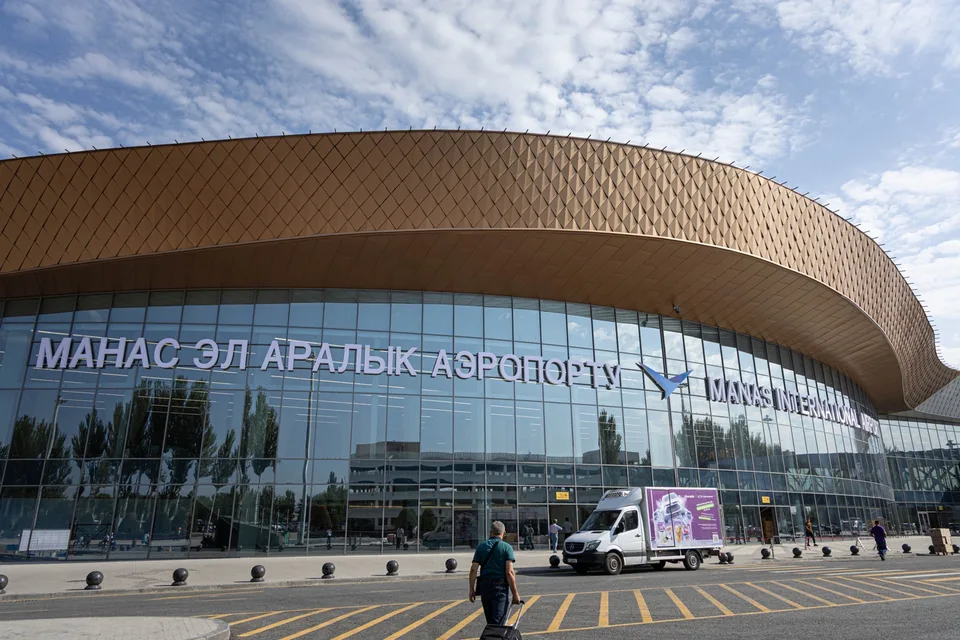
Renovated facade of Manas International Airport. Photo: Manas International Airport.
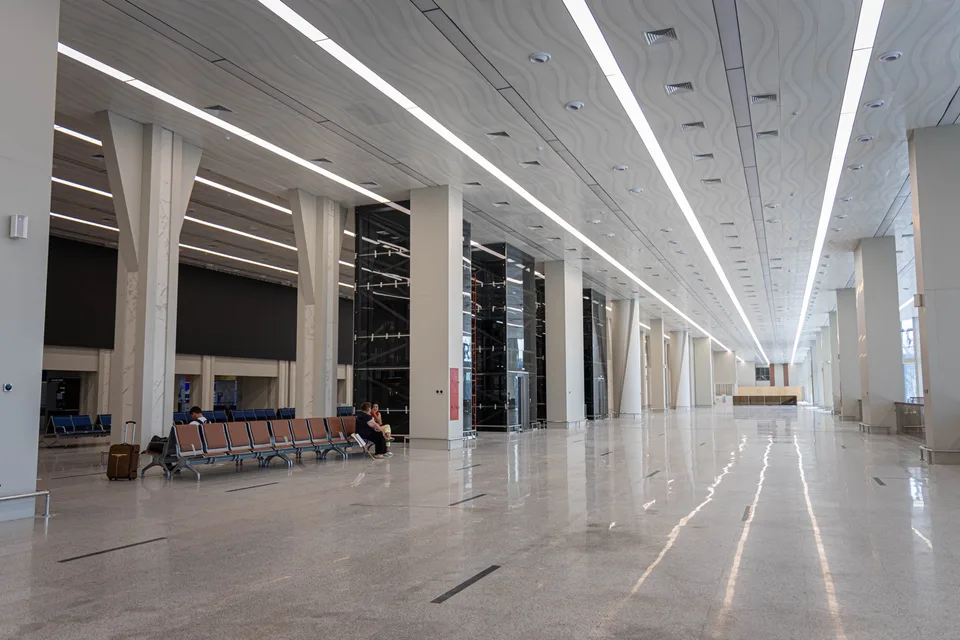
Renovated terminal space at Manas International Airport. Photo: Manas International Airport.
Why scale matters
The need for this expansion becomes clearer when viewed against rising passenger demand.
In 2024, Kyrgyzstan’s airports handled around 5.8 million passengers. In 2025, a new record of more than 6 million passengers was reached. Manas accounts for more than half of the country’s total passenger traffic.
That changes the context of the reconstruction itself.
Additional terminal space, gates and parking are not simply about making the airport look more modern. They create the physical capacity required for further passenger growth, a higher number of flights and a broader route network.
Today, Manas is connected to roughly 40 destinations. The logical next step after expanding the infrastructure is to increase the number of direct routes, frequencies and airlines serving Bishkek.
Further opportunities emerged in 2026 when Kyrgyz air carriers were removed from the European Union Air Safety List.
This does not automatically translate into new routes to Europe. Each route still requires an airline, suitable aircraft, commercial demand, regulatory approvals and airport slots. But a long-standing systemic restriction has been removed, creating greater room for the development of international air connectivity.
For a landlocked country, that matters particularly strongly.
An airport here performs more than a transport function. It connects Kyrgyzstan with tourism markets, business centres, international partners and potential investors.
The modernisation of Manas is therefore both an infrastructure project and a question of the country’s external connectivity.
The land transport side of this question is explored in the analysis of the China-Kyrgyzstan-Uzbekistan railway and its implications for logistics and investment.
The entire passenger journey matters
A modern airport is not only about a new building, equipment and infrastructure. What matters is how the entire passenger journey works after landing.
How long does it take to leave the aircraft and clear passport control? Is the wayfinding clear? How quickly does baggage arrive? How easy is it to pass through customs, meet a passenger, find a taxi and reach the city?
These seemingly ordinary details shape the perception of the airport and, to a considerable extent, the perception of the country itself.
That is why, after a major construction phase, attention naturally shifts toward processes.
Additional square metres increase terminal capacity, but they do not by themselves shorten queues at passport control or accelerate baggage delivery. Once the infrastructure becomes larger, the next task is to ensure that the service system becomes faster, clearer and more convenient as well.
And the passenger journey does not end at the terminal doors.
The access road, parking, taxi services, public transport, wayfinding for people meeting arriving passengers and the journey into Bishkek are all part of the same experience.
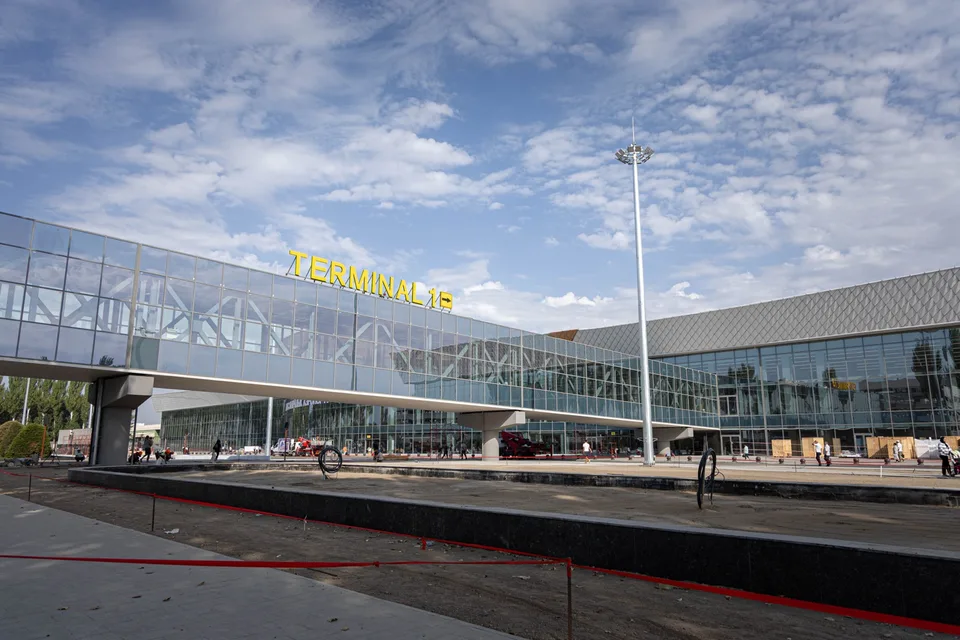
Passage to Terminal 1 and the upgraded landside infrastructure. Photo: Manas International Airport.
Why I pay attention to this
I frequently meet foreign partners, investors and delegations arriving in Kyrgyzstan.
Over time, that makes you look at an airport differently.
When you arrive yourself, much of the experience feels familiar. You know where to go, where to collect your luggage, where you will be met and how to get into the city.
But when you meet someone arriving in Kyrgyzstan for the first time, you begin to see the airport through their eyes.
Nothing here is familiar to them yet. They do not know the city, they may not immediately understand where to go after leaving the terminal, how transport is organised or where they will be met.
When accompanying delegations, what appears to be a simple journey for the guest can require coordinated work by many people and services. One sign of good organisation is that the passenger does not notice this complexity at all.
The aircraft lands. Formalities are completed. Baggage is collected. The meeting is organised. The onward journey is clear.
For Kyrgyzstan, which is developing tourism, international ties and investment cooperation, the quality of that first contact has very practical significance.
The SCO Summit: the first major test
The first truly large-scale test for the modernised Manas Airport will be the Shanghai Cooperation Organization Summit in Bishkek.
According to publicly announced information, the heads of more than 20 states are expected to arrive, accompanied by numerous official delegations and supporting teams.
The principal challenge during those days will therefore be less about any single event and more about the need to handle a large number of special flights while simultaneously maintaining protocol operations, aviation security, ground handling and the resilience of the airport system as a whole.
Almost at the same time, on 31 August, Kyrgyzstan will open the VI World Nomad Games, which will continue through 6 September. This will bring an additional flow of athletes, representatives of international organisations, journalists, tourists and other visitors.
The overlap of these major international events will amount to a genuine stress test for Manas.
But the key measure of success will not only be how smoothly the airport handles official delegations. Such visits are prepared in advance and benefit from dedicated protocol procedures, escorts and organised transport.
Equally important is how reliably the system continues to work for ordinary passengers under elevated demand.
After the Summit and the Games conclude, the next and more sustained phase will begin: the everyday operation of the modernised airport.
That is when the new terminal space, equipment, parking, access road and other infrastructure will need to translate into a new standard of daily performance.
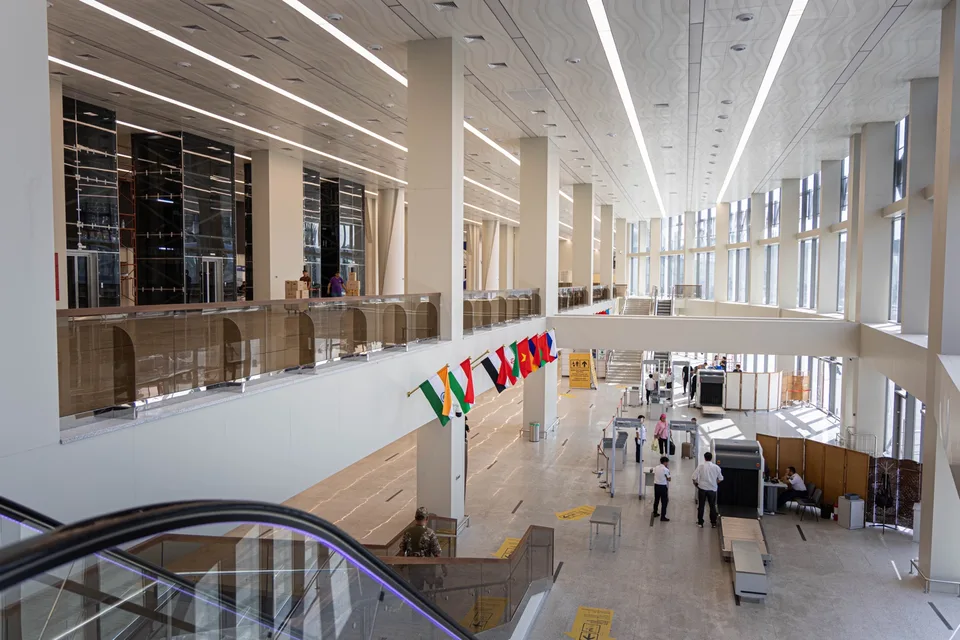
Interior of the renovated terminal at Manas International Airport. Photo: Manas International Airport.
The next stage
The construction phase is almost complete. It is therefore logical to look ahead.
For Manas, the next stage is about the quality of processes, further development of the route network, digital services, ground handling and convenient connectivity between the airport and Bishkek.
For Kyrgyzstan, which is actively developing its tourism potential and international links, the modernisation of the country’s main airport creates a foundation for strengthening Bishkek’s role within Central Asia’s aviation network.
The renewal of Manas matters not only for aviation. It will also help shape how accessible, modern and open Kyrgyzstan appears to the outside world.