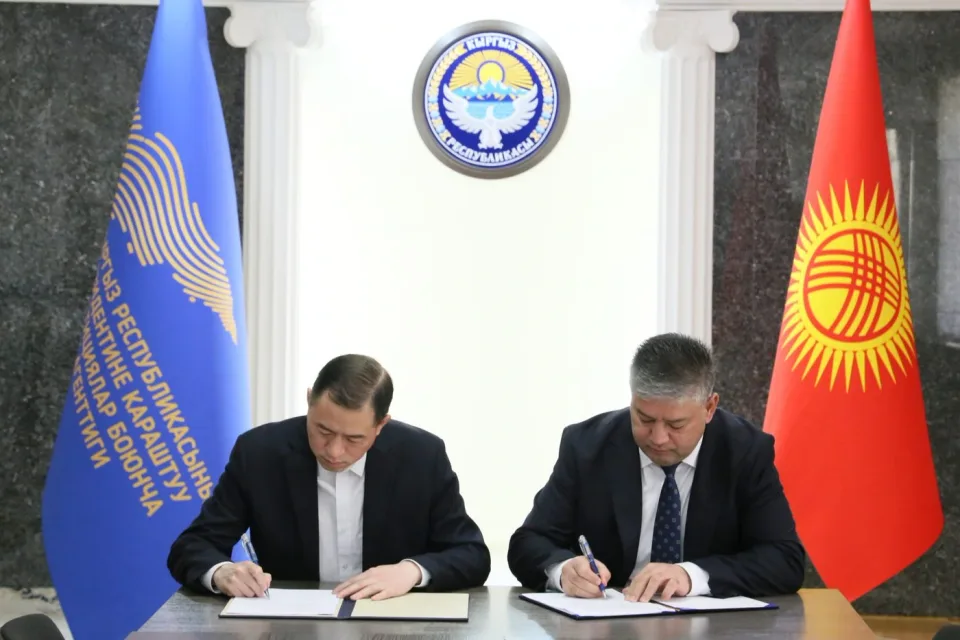
An investment agreement is sometimes treated as a special status for a project or as a general route to state support. Its legal function is more specific. Under Kyrgyz investment law, it is a written agreement between an investor and a state body and/or a local self-government body that sets out the parties’ rights, obligations and responsibility in connection with an investment project. This definition appears in Article 4(11) of Law No. 198.
Practical assessment. Investing in Kyrgyzstan does not automatically require an investment agreement. Many projects can be implemented under the general legal regime through company incorporation, acquisition or lease of assets, permits, technical conditions, licences and other approvals.
An investment agreement becomes particularly relevant where a large project requires long-term reciprocal commitments by the investor and the state, coordination among several public authorities, the use of state property or land, infrastructure arrangements, phased financing or other obligations that are better fixed in one enforceable document.
Which public authority can be a party to the agreement
The law. Article 31(2) of Law No. 198 allocates authority to conclude investment agreements according to the amount of investment. The table uses Kyrgyz soms, as specified in the law.
| Investment amount | Public-sector party |
|---|---|
| KGS 1 million to KGS 50 million | a local self-government body, excluding city mayor’s offices |
| KGS 1 million to KGS 200 million | two or more local self-government bodies, excluding city mayor’s offices |
| KGS 1 million to KGS 300 million | a city mayor’s office, excluding Bishkek and Osh |
| KGS 1 million to KGS 400 million | two or more local self-government bodies, including a city mayor’s office, excluding Bishkek and Osh |
| KGS 1 million to KGS 1 billion | local self-government bodies of Bishkek and Osh |
| KGS 1 million to KGS 1 billion | a ministry or other state agency |
| from KGS 1 billion | the Cabinet of Ministers of the Kyrgyz Republic |
Where the statutory thresholds are exceeded, participation by one or more state bodies or local self-government bodies is subject to direct Cabinet coordination under Article 31(3).
For a large project of KGS 1 billion or more, the law therefore places the investment agreement at Cabinet of Ministers level. The size of the investment alone, however, does not mean that the agreement will automatically be concluded through direct negotiations.
When direct negotiations with the Cabinet of Ministers are available
The law. Article 14(1) of Law No. 198 links direct negotiations for an investor-initiated project to three conditions:
- the project is consistent with state development programmes in priority economic sectors or the social sphere;
- the investment meets the Article 31 threshold, which is from KGS 1 billion for the Cabinet of Ministers;
- the investor has a successful track record in comparable projects.
The reference in Article 14 to Article 31 was corrected by Article 1(2) of amending Law No. 46 of 8 April 2026. The original publication of Law No. 198 referred to Article 30 at this point and must therefore be read with the amendment.
Article 14(2) leaves the procedure and other conditions to the Cabinet of Ministers. The corresponding Regulation was approved by Resolution No. 382 of 1 June 2026. The linked official publication contains the resolution itself; the requirements of its annex should be checked against the full Regulation when preparing a specific project.
Practical assessment. The KGS 1 billion threshold makes this route potentially available but does not create an unconditional entitlement to an agreement. The investment amount, investor's experience and connection to a state programme each need supporting evidence.
Preparation starts with the project, not the contract
In practice, the first task is to structure the investment project rather than to begin drafting the agreement itself.
Before approaching the state, the investor should define the project scope, site, total investment amount, funding sources, implementation stages, land and infrastructure requirements, principal regulatory procedures and the intended final result. The investor should also prepare corporate documentation, evidence of relevant project experience and a finance model.
Article 4, points 8 and 10 distinguishes an investment proposal from an investment project. The proposal provides a short description and plan. The project sets out the economic rationale for the amount and timing of investment and the practical measures for implementation.
For the broader sequence of project preparation, see Investing in Kyrgyzstan: A Practical Route from Idea to Launch.
What information the investor should prepare
The law. Article 5(1) of Law No. 198 provides for:
- a statement of intention to enter into an investment agreement, including financial commitments;
- certified copies of registration and constitutional documents;
- a certificate confirming the absence of tax arrears;
- a certificate from the banks servicing the investor’s accounts showing turnover for the previous six months;
- information on existing indebtedness with supporting documents;
- information confirming a positive business reputation and the absence of claims, proceedings, investigations or threats of such actions that could materially affect the investor’s business or ability to perform its obligations.
The requirement that the copies be specifically notarised was removed by Article 1(1) of Law No. 46. The former wording of Article 5 therefore cannot establish a mandatory notarisation requirement. Translation and formal requirements for particular foreign documents should be checked separately.
Article 30 also provides for government checks of the investor's reputation, experience and financial standing. Additional information may be requested where publicly available material is insufficient.
Practical assessment. Evidence of funding and project experience should be collected alongside the project documents. A company presentation alone does not provide the information needed for these checks.
What the implementation schedule should show
The law. Article 32(1), points 4, 5 and 7 requires the agreement to address financing and monitoring, the amount and sources of funding, implementation deadlines, the schedule and procedures for monitoring implementation.
Practical assessment. A statement such as “invest KGS 5 billion over several years” does not give the parties a workable basis for managing their obligations. The plan should identify investment by stage, each party's actions, evidence of completion and measurable results.
Dependencies deserve particular attention: for example, which land rights and utility arrangements must be in place before a corresponding investment stage begins. Aligning these requirements helps expose unrealistic deadlines before signing.
How the procedure generally works
The following is a practical preparation sequence, rather than an exhaustive administrative procedure:
01. Project structure. Define the investment amount, funding sources, site, infrastructure and principal permitting issues.
02. Project documents. Prepare the investment proposal, economic and legal rationale, and implementation schedule.
03. Eligibility review. Assess the project against Articles 5, 14 and 31 of Law No. 198 and assemble evidence of the investor's experience and financial standing.
04. Negotiations and coordination. Identify the government participants, their powers and reciprocal obligations. For agreements through direct negotiations, Article 14(5) expressly requires prior coordination with the National Investment Agency under the President of the Kyrgyz Republic. The Agency also coordinates participants and maintains the agreement register.
05. Decision and signing. Check the requirements of the Regulation approved by Resolution No. 382, the necessary approvals, the Cabinet decision and the signatory's authority for the specific project.
Support in principle does not mean that an investment agreement has been completed. Project, legal and inter-agency issues still need concrete resolution before signing.
What the investment agreement should regulate
The law. Article 32(1) sets out the mandatory terms of an investment agreement. Among other matters, it should address the subject and parties, rights and obligations, project management, financing, implementation terms and schedule, monitoring, termination, liability and dispute resolution.
In practical terms, a well-structured agreement should answer four questions clearly:
What must the investor do, what must the government party do, by when, and what consequences follow if either party breaches its obligations?
If the state’s key obligations are framed only as “assist” or “consider the possibility”, while the investor’s obligations are fixed in precise amounts and deadlines, the balance of the agreement requires additional scrutiny.
An investment agreement cannot create incentives outside the law
The law. Article 31(4) prohibits investment agreements from establishing tax, customs or other benefits that are not provided for by the legislation of the Kyrgyz Republic.
Practical assessment. Each proposed incentive needs a separate legal basis and a review of its eligibility conditions. A contractual clause cannot by itself replace a provision of tax, customs or other applicable legislation.
If the project involves state land or state property
The law. Article 14(3) and (4) subjects the disposal of state property to applicable legislation and land restrictions for foreign persons. Disposal is unavailable where sector-specific legislation prohibits it.
Article 14(4) provides, among other conditions, for market value determined through independent appraisal, an agreed method of disposal and subsequent use, a prohibition on further disposal by the investor until the agreement has been fully performed, and a procedure for returning property if the investor fails to meet its obligations.
Practical assessment. An agreement alone does not establish that rights to a particular asset have passed to the investor. Ownership, land category and designated use, restrictions, the permitted method of granting rights, necessary decisions and formal registration require separate checks. These issues should be resolved before the schedule commits the investor to starting work on the site.
An investment agreement does not replace permits
Practical assessment. Signing the agreement does not itself establish that the project has completed the necessary permitting procedures.
If a project requires urban-planning documentation, a change of land designation, construction permits, licences, expert reviews, technical conditions or utility connections, those decisions must still be obtained under the procedures established by law.
An investment agreement structures the project’s relationship with the state, but it does not replace the project’s regulatory pathway.
Before signing, the parties should therefore test the obligations in the agreement against the full implementation roadmap: land, design, permits, infrastructure, financing, construction and commissioning.
What happens if obligations are breached
The law. Article 32(4) makes failure to meet investment obligations a ground for early termination and recovery of funds equal to the value of the incentives granted. The agreement must also specify the conditions for suspension and termination and the parties' liability under Article 32(1), points 11 and 12.
Practical assessment. Before signing, examine notice requirements, opportunities and time limits for remedying a breach, the consequences of delay by each participant, asset return and the calculation of monetary claims. A specific cure period must be checked against the applicable Regulation and agreement; these provisions of the law do not establish a universal period.
The financing and implementation schedule is therefore more than a technical attachment. Once signed, it helps establish which obligations have been performed and where a breach has occurred.
Practical conclusion
An investment agreement is an important tool for structuring large projects, particularly where implementation depends on coordinated actions by the investor and several public authorities.
The agreement itself, however, should not become the objective of the project. Its value depends on how precisely it links the investor’s commitments, state actions, land and property, financing, regulatory procedures, infrastructure, timing and liability.
A strong investment agreement is therefore prepared long before formal direct negotiations begin, by structuring the project correctly and building a realistic implementation roadmap.
A broader overview of market entry and project structuring is also available in Investors: Kyrgyzstan.